Why Recovery Is Just as Important as Your Workout 🧘♀️💪
Jul 15, 2026
by Beth Roberts
Many people think progress happens while they are exercising.
In reality, your workout is only the stimulus.
The actual improvements happen afterward, when your body repairs muscle tissue, restores energy, and adapts to the work you have done.
This is why two people can follow the exact same workout program and see very different results. One prioritizes recovery. The other skips it.
At Killington Boot Camp, recovery is not treated as an afterthought. It is an essential part of our cross-training philosophy because training hard only works if your body is ready to train again.
🏔 What Recovery Really Means
Recovery is much more than taking a day off.
It is the process that allows your body to rebuild and become stronger after physical activity.
Proper recovery supports:
- Muscle repair
- Joint health
- Healthy movement patterns
- Energy levels
- Mental focus
- Long-term consistency
Without recovery, your body eventually begins to compensate instead of improving.
💪 Why More Workouts Are Not Always Better
One of the biggest misconceptions in fitness is that more workouts automatically produce better results.
In reality, constantly pushing through fatigue often leads to:
- Lingering soreness
- Plateaus in strength
- Poor workout quality
- Increased injury risk
- Loss of motivation
The goal should not be to train as often as possible.
The goal should be to train well, recover well, and repeat the process consistently.
That is exactly how our Group Strength and Conditioning Classes are designed.
🧠 Your Body Gives You Recovery Signals
Many people ignore the warning signs that recovery is falling behind.
Pay attention if you notice:
You feel unusually tired before workouts
Weights that once felt manageable suddenly feel heavy
Your joints stay sore for several days
Your sleep quality declines
You struggle to stay motivated
These are not signs that you need to work harder.
They are often signs that your body needs more recovery.
Learning to recognize these signals can prevent weeks or even months of unnecessary setbacks.
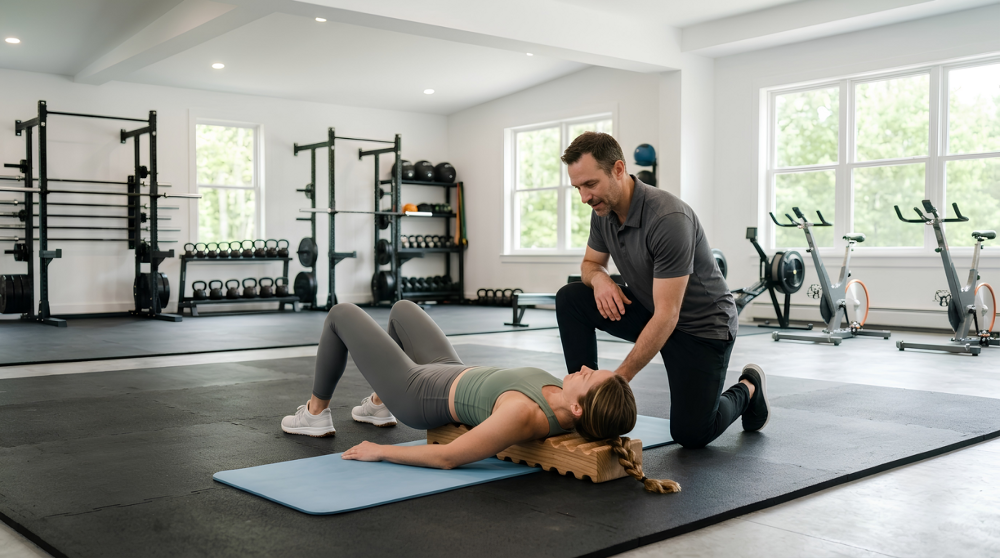
🧘 Block Therapy Supports Better Recovery
Recovery is not just about rest. It is also about helping your body move more efficiently.
That is one reason many members incorporate Block Therapy Sessions into their routine.
Block Therapy focuses on improving fascia health, mobility, breathing, and circulation.
Many people notice benefits such as:
- Improved flexibility
- Better posture
- Less muscle tension
- More comfortable movement
- Faster recovery between workouts
When your body moves better, every workout becomes more productive.
❄️ Recovery Changes With the Seasons
Living in Killington means your body faces different demands throughout the year.
During ski season, your legs and core may experience more fatigue than usual.
In the summer, hiking, biking, and outdoor activities often increase your weekly activity level.
As your activity changes, your recovery should change too.
Some weeks your body may benefit from:
- Extra mobility work
- Additional stretching
- Lighter training sessions
- A Block Therapy appointment
Smart training is about listening to your body rather than forcing the same routine every week.
⚡ Recovery Helps You Perform Better
Many people think recovery slows progress.
The opposite is usually true.
When you recover properly, you can:
- Train with better technique
- Lift more effectively
- Improve endurance
- Maintain higher energy
- Stay consistent throughout the year
That is why recovery is built into our Performance-Based Cross Training Programs instead of being treated as something separate.
📋 A Simple Recovery Checklist
If you want to recover more effectively, focus on these habits:
Sleep at least seven to eight hours whenever possible
Stay hydrated throughout the day
Eat enough protein to support muscle repair
Move gently on rest days
Include mobility work every week
Listen to your body's signals
Use recovery-focused services like Block Therapy Sessions when needed
Small improvements in recovery often create bigger improvements in performance.
🚫 Common Recovery Mistakes
Training hard every day without variation
Ignoring persistent soreness
Skipping warm-ups and cool-downs
Treating sleep as optional
Believing recovery means being inactive
Waiting until an injury develops before slowing down
The most successful athletes are not always the ones who train the hardest.
They are often the ones who recover the smartest.
💥 The Bottom Line
Recovery is not taking a break from progress.
Recovery is part of progress.
When you combine structured training, intelligent recovery, and consistent habits, your body becomes stronger, more resilient, and better prepared for everything Vermont has to offer.
Whether you are preparing for ski season, exploring local trails, or simply trying to stay healthy, Killington Cross Training Programs paired with Block Therapy Sessions help create a balanced approach that supports long-term fitness.
Train hard.
Recover intentionally.
Keep moving forward. 💪🏔