Group Fitness vs. Personal Training: Which Is Right for You?
Sep 15, 2026
by Beth Roberts
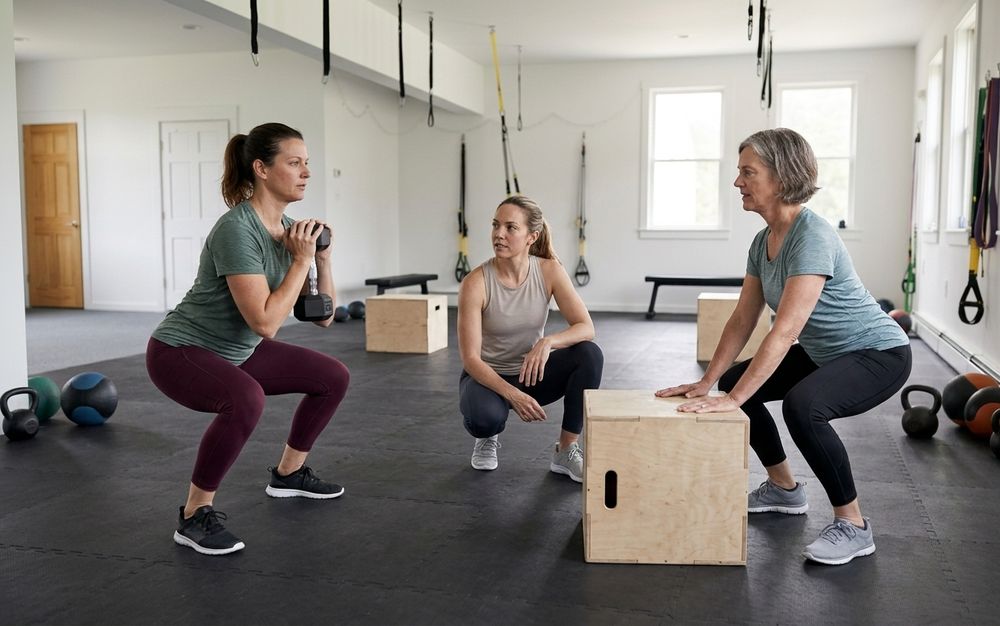
If you want to get stronger, improve your conditioning, or simply become more consistent with exercise, you may eventually face an important decision: should you join group fitness classes or work with a personal trainer?
Neither option is automatically better.
Group fitness is often a good fit when you want structure, variety, coaching, and the energy of training alongside other people. Personal training makes more sense when you want more individualized programming, closer attention, or help working toward a specific goal.
For some people, the best answer is actually a combination of both.
At Killington Boot Camp, these options exist under the same fitness and wellness approach. The current program includes group and private fitness training as well as small group coaching, giving you several ways to choose the level of personalization that fits your needs.
What Is the Main Difference?
The biggest difference is not simply whether other people are in the room.
It is how much of the session is built specifically around you.
In a group class, the coach manages a workout designed for several participants. Exercises can be scaled, but everyone is generally working within the same class format.
In personal training, the session can be built around your current ability, goals, schedule, exercise experience, and individual needs.
At KBC, current group classes are described as scalable for beginners through advanced participants, while one-on-one and small group coaching provide more personalized programming and accountability.
👥 When Group Fitness May Be the Better Choice
Group fitness can work especially well if your biggest challenge is knowing what to do when you arrive at the gym.
Instead of creating your own workout, you follow a structured session led by a coach.
This can be useful if you:
- Want a planned workout
- Enjoy exercising around other people
- Like variety in your training
- Need a consistent appointment on your calendar
- Are comfortable following movements within a group setting
- Want coaching without needing an entirely individual session
KBC currently offers classes such as The Circuit, Boot Camp, and Pliability and Butts and Guts combinations, although the schedule changes and should always be checked before attending.
Group sessions generally run 45 to 60 minutes, and the necessary equipment is provided.
For someone who enjoys the social side of exercise, that structure can make training feel easier to maintain.
🎯 When Personal Training May Make More Sense
Personal training gives the coach more opportunity to focus on one person at a time.
That can be valuable when you are new to strength training, returning after a long break, preparing for a particular activity, or trying to learn exercises with more confidence.
KBC describes its private training as custom training designed around the client’s needs, with private, semi-private, and small group options available.
You may prefer personal training if you:
- Have a very specific performance goal
- Want more instruction on exercise technique
- Feel unsure about where to begin
- Prefer a quieter training environment
- Want workouts adapted around your current abilities
- Need more individual accountability
- Are preparing for skiing, hiking, or another recreational activity
Individualized exercise planning is also consistent with professional exercise practice. The American College of Sports Medicine includes individualized exercise prescription, instruction, progression, and modification among the responsibilities of qualified exercise professionals.
Personal training does not mean the workout should always be harder. Often, its biggest advantage is that the difficulty can be more precisely matched to you.
Small Group Training Can Be the Middle Ground
There is another option that is easy to overlook.
Small group training combines some of the personalized attention of private coaching with the energy of training with other people.
At KBC, small group sessions are a verified part of the current training offering.
This format may suit you if you want:
- More coaching attention than a larger class
- A social training environment
- Programming around a shared goal
- A smaller number of people in the session
For example, KBC has offered dedicated Winter Sports Conditioning small group sessions, demonstrating how a smaller format can be used around a particular activity or seasonal objective. Because specialty programs can change, check the current schedule before planning around a specific session.
💪 Your Weekly Exercise Plan Matters More Than the Format
Whether you choose a group class or personal training, the bigger goal is developing a routine you can actually maintain.
Current federal physical activity guidance recommends that adults work toward 150 to 300 minutes of moderate-intensity aerobic activity each week, or the equivalent amount of vigorous activity, while also completing muscle-strengthening activity on at least two days each week.
That does not mean every minute must happen inside a gym.
In Killington, your overall activity might include structured strength sessions along with hiking, skiing, walking, cycling, or other recreational activities.
The training format you choose should complement that lifestyle rather than compete with it.
A Practical Decision Checklist
Ask yourself these questions before choosing.
Choose group fitness first if:
You enjoy exercising with others.
You want workouts planned for you.
You already feel reasonably comfortable following exercise instruction.
You want several types of sessions to choose from.
The energy of a class helps you stay consistent.
Consider personal training first if:
You are not sure what exercises are appropriate for you.
You want detailed coaching on movement technique.
You have a specific strength, conditioning, or recreational performance goal.
You prefer more individualized attention.
You have been inactive for a long period and want a gradual return to structured exercise.
Consider combining both if:
You enjoy classes but want occasional individual coaching.
You want help developing technique before joining more group sessions.
You have a particular goal but also value the community of group training.
You want more flexibility in how you structure your week.
What If You Are a Complete Beginner?
Being new does not automatically mean you need personal training forever.
It may simply mean you need a better introduction.
Killington Boot Camp currently offers an Intro to KBC Starter Package for beginners and people restarting their fitness journey. It includes an initial consultation and schedule setup, short workout videos, and a private session designed to introduce participants to relevant class basics.
That type of transition can be helpful because starting gradually is generally preferable to jumping immediately into a workload that exceeds your current capacity.
Federal guidance specifically recommends gradually increasing muscle strengthening activity over time, particularly for people who are becoming more active.
If you have a chronic condition, significant physical limitation, or concerns about whether a particular level of exercise is appropriate, discuss your plans with an appropriate health professional before substantially increasing your activity.
Questions to Ask Before Your First Session
Before committing to any training format, ask:
- What happens during a typical session?
- Can exercises be adjusted to my current ability?
- How often would you recommend I attend?
- What should I do outside my structured sessions?
- How will the program change as I improve?
- What should I tell the coach about previous injuries or limitations?
These questions help you evaluate the coaching process rather than choosing based only on how difficult a workout looks.
FAQs
Is group fitness good for beginners?
It can be. Group classes are scalable for beginners through advanced participants. Beginners who want additional preparation can also explore the current Starter Package.
Do I need personal training before joining a group class?
Not necessarily. Some people are comfortable starting directly with an appropriately scaled group session. Others benefit from individual instruction first. Your experience and confidence should guide the decision.
Can I combine personal training and group classes?
Yes. KBC offers group, one-on-one, and small group coaching, so a mixed approach is possible.
Which option gets better results?
There is no universal winner. The better option is the one that provides appropriate training, progression, coaching, and enough consistency for you to continue doing it.
Find the Training Format That Fits You
You do not need to choose the most intense option.
You need to choose the format that helps you train consistently, confidently, and at an appropriate level.
If you enjoy structure and community, start by exploring the Killington Boot Camp group class schedule. If you want more individual guidance, the group and private fitness training options include one-on-one and small group coaching.
The right starting point is the one you can build on.